Museum of Preserved Aesthetics: A Small Monument to Oil (OR: How I Learned to Stop Worrying and Love the Cracked Walls and Tinned Fish, 2025
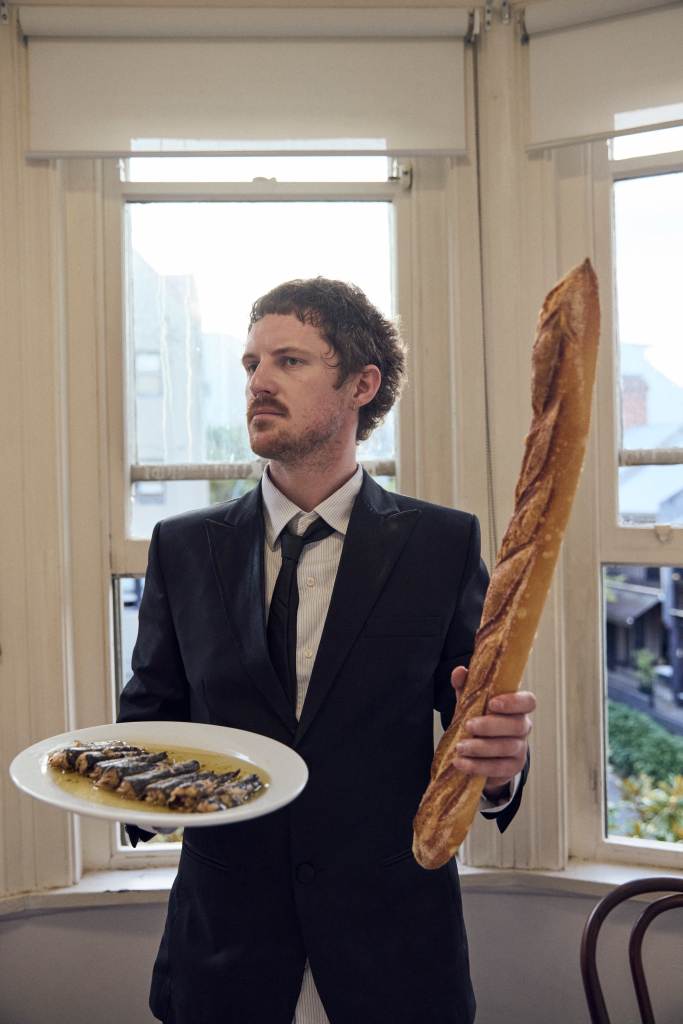
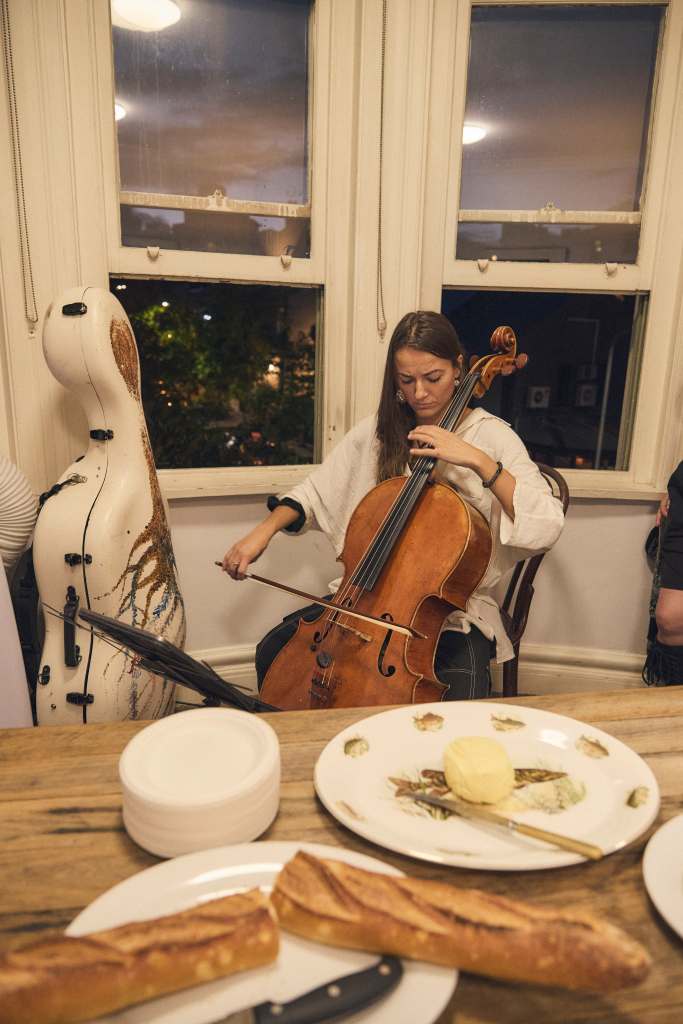
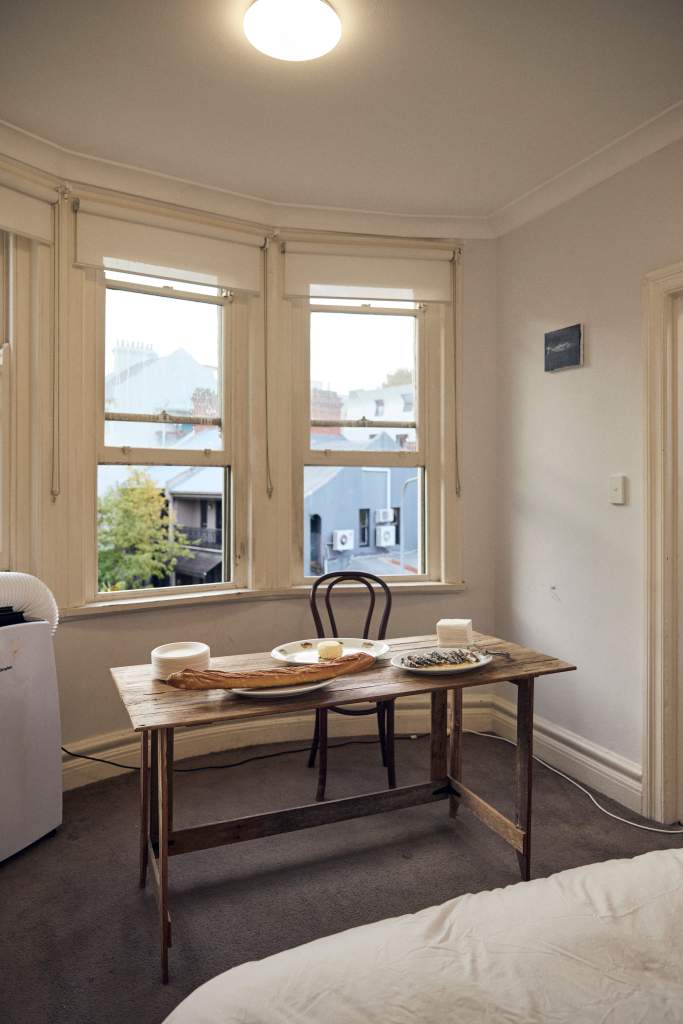
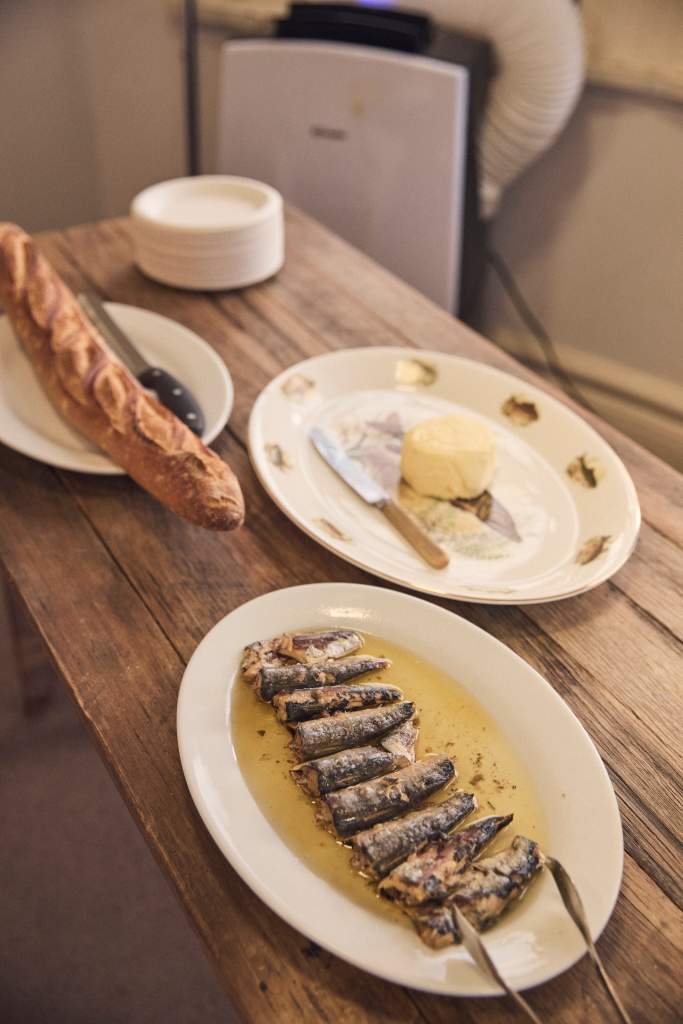
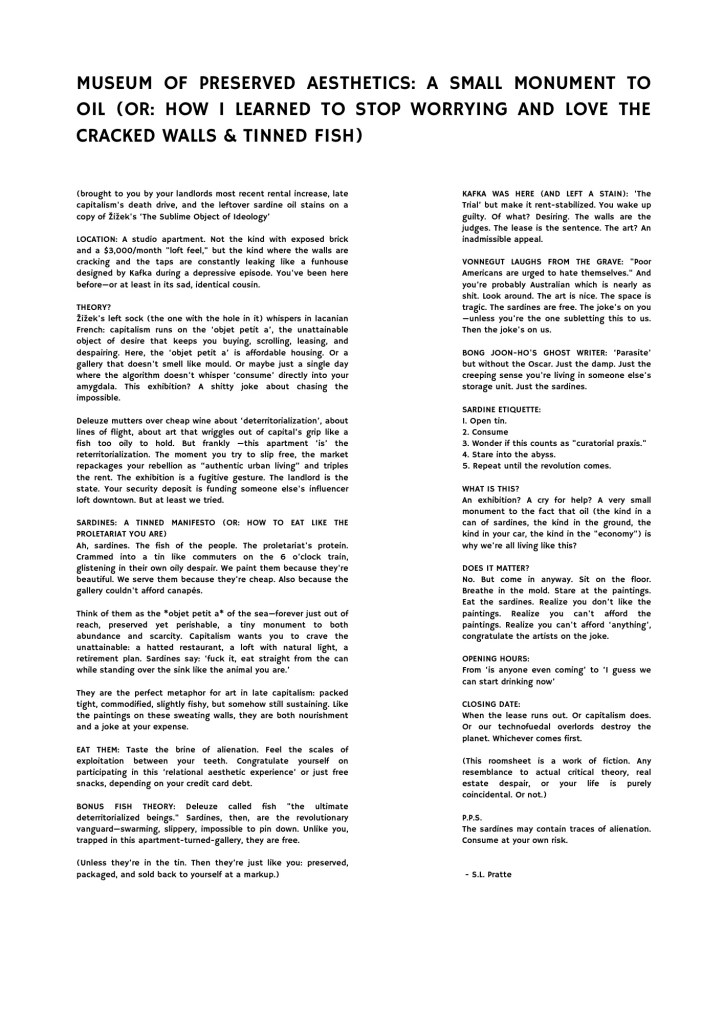
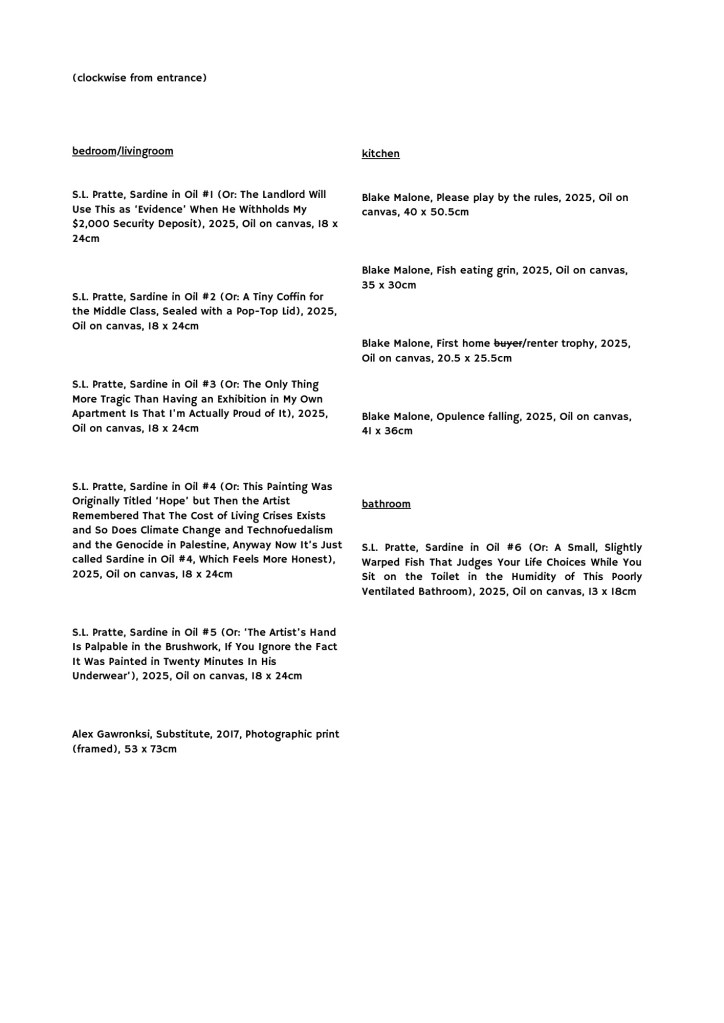
This exhibition takes place entirely within a small, deteriorating studio apartment, which functions as a symbolic space to challenge the infrastructure of the commercial art world. All works are sardine-related, and visitors are invited to eat sardines with bread, creating a situation where participants become part of the installation—literally consuming the object of critique and blurring the boundary between observer and participant. This setup challenges the conventions of traditional exhibitions, emphasising DIY practices and the rejection of institutional authority.
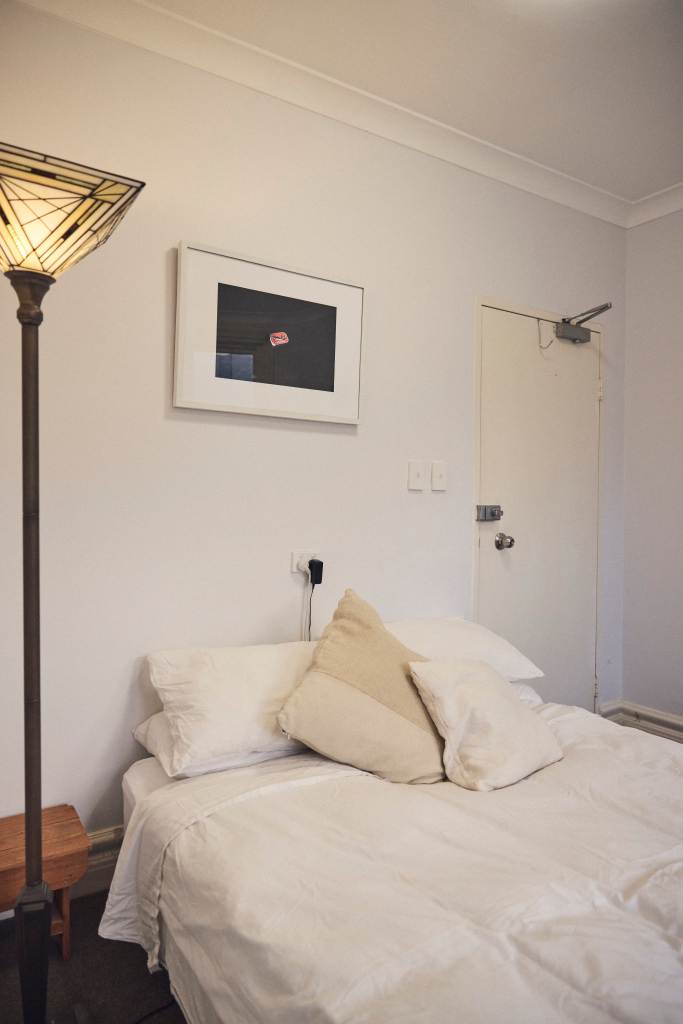
The act of holding an exhibition in a tiny, impoverished space with small banal artworks directly critiques the idea that art must be housed in galleries with polished walls and high budgets. Instead, it presents a ‘museum’ built from the conditions of poverty, austerity, and the cost-of-living crises—highlighting how economic pressures shape and limit artistic production. The space itself becomes a monument to the oil that fuels late capitalism: oil in the ground in the form of resource extraction, and the metaphorical oil of consumerism and exploitation that sustains systemic inequality.
The inclusion of a live cellist performance adds atmosphere but also underscores the tension between art’s cultural significance and its commodification. The sardines symbolize the proletariat—packaged, preserved, and consumed. They highlight the myth that prosperity is attainable, exposing the growing reality of economic precarity faced by many in neoliberalism, especially in the context of housing and the cost-of-living crises.
From a theoretical perspective, this work draws on ideas about how capitalism, through its systems of control and commodification, turns even basic needs—like shelter, nourishment, and cultural expression—into commodities. It demonstrates how DIY practices can serve as acts of resistance, creating spaces outside (as much as possible) the logic of markets and institutions. The choice to operate within a small, decayed apartment exposes the contradictions of the art world’s claims of openness and progress, revealing how systemic inequalities and the commodification of life continue to shape the value of cultural production.
The title and setting also evoke the concept of a “small monument”—a critique of the grandiosity often associated with art institutions, emphasising instead the value of small, everyday acts of resistance. The exhibition questions whether art can genuinely escape systemic control or if such attempts are merely symbolic gestures. It invites reflection on the role of infrastructure, oil, and the everyday conditions of poverty and precarity in shaping the current cultural landscape.

 IAI Institute