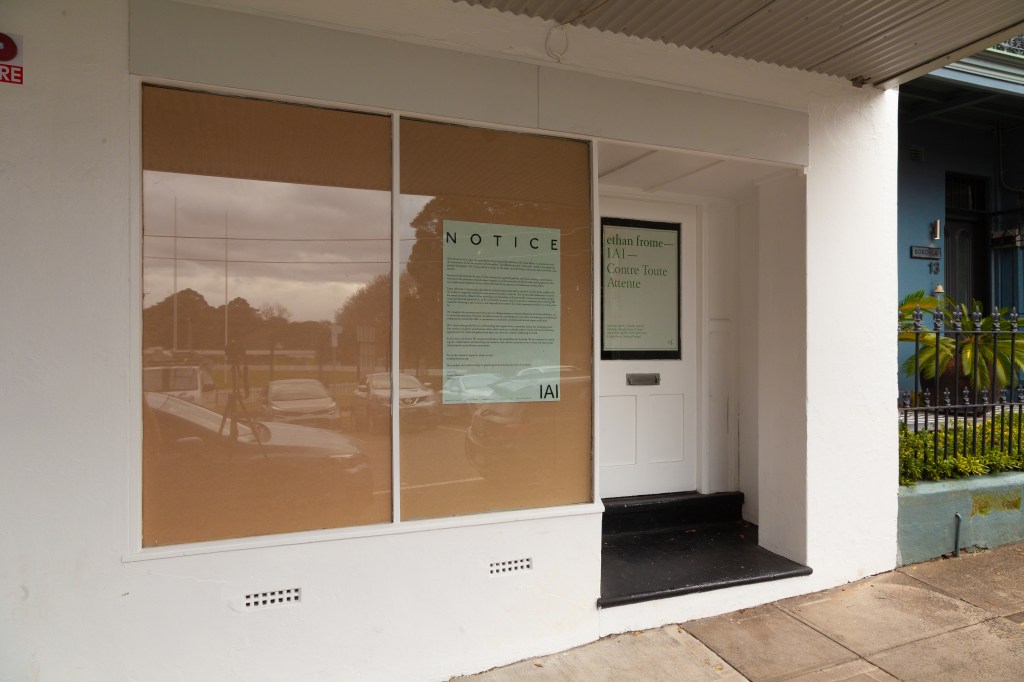
Contre Toute Attente (Against All the Odds), 2024
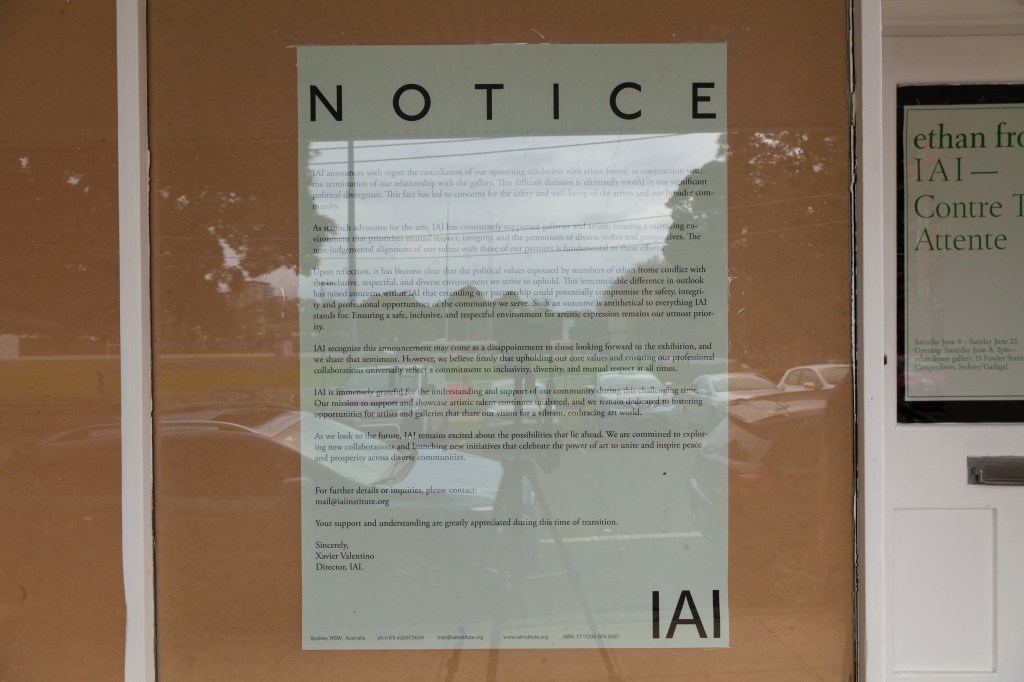
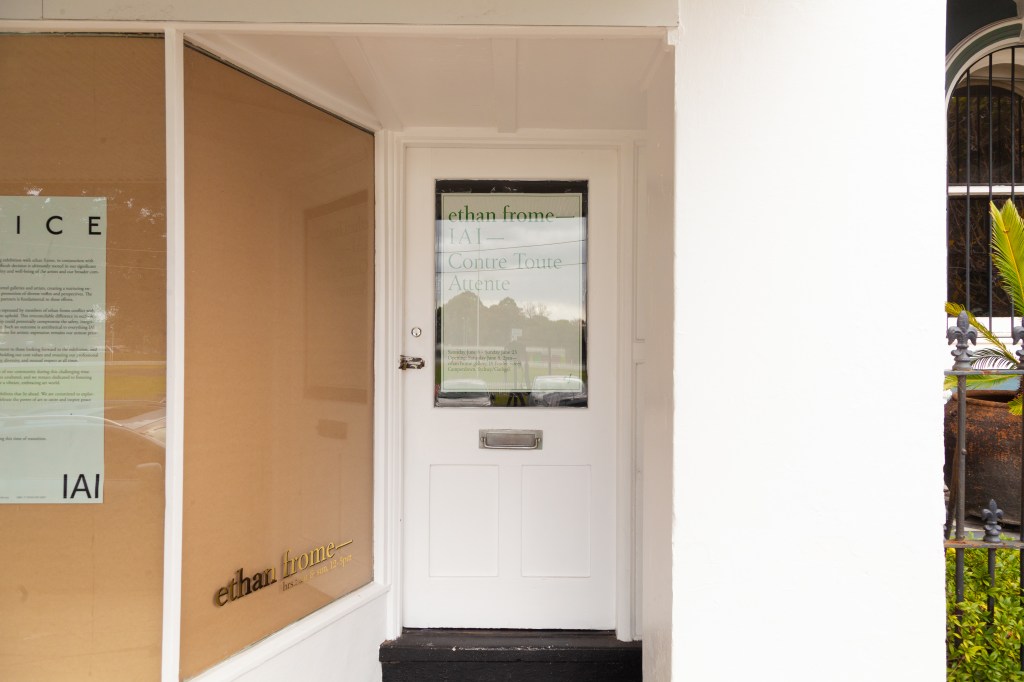
“Contre Tout Attente” is an installation that critically examines the discrepancy between the Western capitalist art world’s self-image of openness and dialogue, and its persistent tendency to repress voices that challenge dominant ideologies. The work presents an intentionally disrupted scene: upon arrival, visitors find the gallery boarded up, with a notice outside explaining that the exhibition has been canceled. A handwritten sign further apologizes and invites passersby to join for a drink at the Lady Hampshire around the corner on Parramatta Road—an ironic gesture that underscores unfulfilled promises.
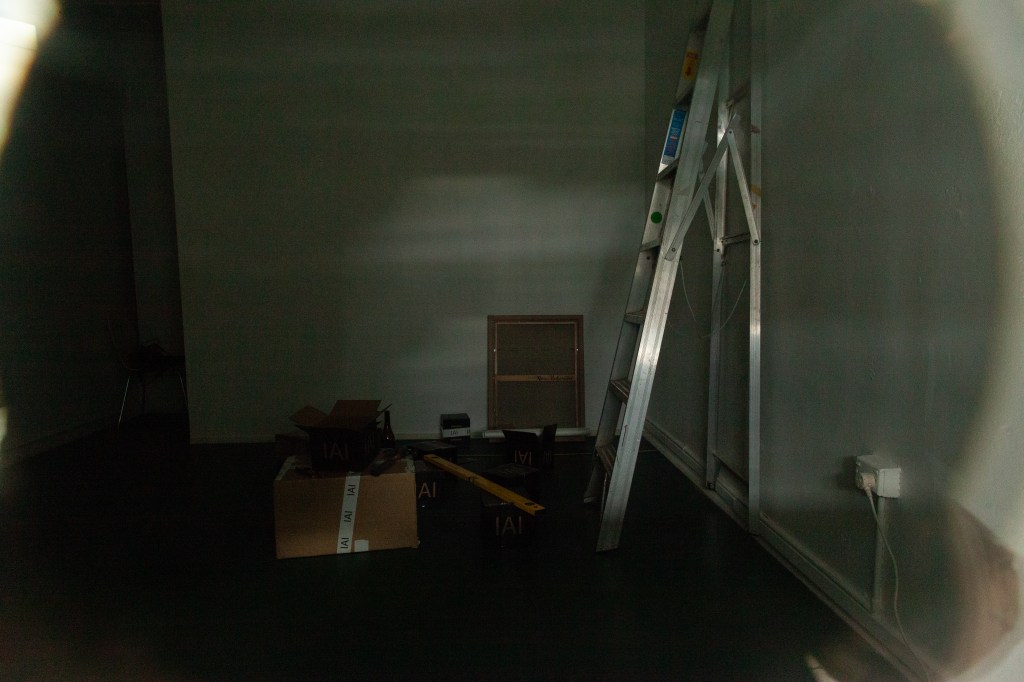
The visual remnants of a half-assembled exhibition—tools and artworks left abandoned—evoke the ongoing silencing of voices, particularly those of Palestinian artists whose work has been recently canceled, censored, or excluded from exhibitions. Despite the art world’s claims of fostering openness and dialogue, these actions reveal a deeper repression aligned with broader Western political and ideological agendas. The work highlights how the so-called spaces of free expression often serve to reinforce the prevailing power structures, silencing dissenting or marginalized voices in the process.
This installation underscores that the narrative of the art world as a space of inclusivity is often a façade. The act of cancellation, repression, or marginalization—especially of voices that question or challenge the status quo—remains a persistent reality. The visual of a halted exhibition symbolises how systemic mechanisms of control are embedded within Western cultural institutions, which routinely promote a sanitized, controlled version of openness while excluding uncomfortable truths.
“Contre Tout Attente” invites viewers to reflect on the contradictions inherent in the Western art world’s claims of freedom and dialogue. It questions who truly benefits from this surface-level openness and exposes how dominant ideologies continue to shape, limit, and silence alternative voices—particularly those of oppressed communities like Palestinians. The work suggests that resistance to these forces, even when confronted with barriers and cancellations, remains vital.

 IAI Institute